


Conquering Mount Raung: The Most Extreme Volcano Ridge…
Indonesia is home to over 120 active volcanoes, but among mountaineers and adventure seekers across Southeast Asia, one name evokes equal measures ofMount Raung: The Most Extreme Volcano Ridge Walk in Java, Indonesia
Indonesia is home to over 120 active volcanoes, but among mountaineers and adventure seekers across Southeast Asia, one name evokes equal measures of reverence and adrenaline: Mount Raung. Towering at 3,344 meters (10,971 ft) above Banyuwangi, Bondowoso, and Jember in East Java, Mount Raung holds the undisputed title of the most extreme volcano trek in Java.
Unlike standard trekking peaks in Indonesia where you simply walk up ash slopes, reaching Mount Raung’s Puncak Sejati (True Summit) requires specialized climbing harnesses, technical rope maneuvering, and steady nerves to cross narrow knife-edge ridges flanked by 500-meter vertical drops.
Driven by a passion for authentic expedition travel and technical ridge climbing, I set out to conquer this giant alongside a close friend and one of our top trusted local mountain guides. As the founder of Keliling Nusantara, my goal wasn’t just to conquer the peak, but to personally audit every safety protocol, campsite, and ridge anchor along the famous Kalibaru Route—ensuring we provide the most secure, seamless private guided expeditions for our international guests.
Overland Journey & Basecamp Preparation

Our expedition began from Surabaya, driving our private vehicle through the scenic, winding highways of East Java toward Kalibaru, Banyuwangi. Arriving in Kalibaru in the late afternoon, we checked into a cozy local hotel near the village. A full night of restful sleep and a proper meal are critical prerequisites before tackling Raung’s grueling elevation gain.
At 06:00 AM the following morning, we headed directly to the official Kalibaru Mount Raung Basecamp. After a hearty local breakfast, we thoroughly audited our climbing gear and logistics. The Kalibaru route demands specialized safety equipment:
- Personal Climbing Harnesses & Helmets: Essential for fall protection along sheer cliff faces.
- Carabiners & Descenders (Figure-8): For safe tethering to fixed steel lines and executing rappels (rappelling).
- Technical Ropes & Webbing: Maintained and double-checked for structural integrity.
- Hydration & High-Calorie Rations: Mandatory, as there are zero water sources above Pos 1.
At 07:30 AM, following an official safety briefing and team prayer led by our basecamp officers, we officially commenced the trek.
The Ascent: From Plantation Ojek to Camp 7
To preserve vital leg energy for the upper slopes, we took local motorcycle taxis (ojek) from the basecamp, navigating narrow coffee and rubber plantation tracks to Pos 1. From Pos 1, we began a pleasant warm-up walk toward Pos Warung. I decided to go by Ojek to Pos Warung, save more energy and time.
Smooth Sailing: Pos Warung to Pos 4
The trail between Pos Warung, Pos 2, Pos 3, and Pos 4 winds gently through dense tropical rainforest. The gradient is soft and steady, allowing us to maintain a relaxed pace under the shade of massive tree canopies. By 11:30 AM, we reached Pos 4 in high spirits. However, every experienced Raung guide knows that this gentle forest walk is merely a prelude to the vertical wall that lies ahead.
The Test of Endurance: Pos 5 to Pos 7
Passing Pos 5, the mountain dramatically changes its personality. The soft earth gives way to near-vertical root climbs and steep dirt embankments. Nylon safety ropes are anchored along the trail to assist hikers in pulling themselves upward.
By the time we hit the stretch between Pos 6 and Pos 7, fatigue began to set in. The trail is relentlessly steep, offering no flat ground to rest your legs. Taking steady, measured steps and staying disciplined with hydration, I pushed forward through the thick vegetation. Finally, at 17:00 PM, we broke through the tree canopy and reached Pos 7 (Camp 7) at approximately 2,600 meters—our home for the night.
Exhausted, we pitched our tents, prepared a hot dinner, and turned in early to rest before midnight.
Midnight Summit Attack: The Technical Ridge Walk
At 00:00 midnight, our alarms rang. The high-altitude night air was crisp and freezing. We fueled up with hot coffee, tea, and quick-digesting carbohydrates, leaving our heavy backpacks inside the tents. For the summit assault, we carried only light daypacks with water, energy snacks, warm layers, and our full technical climbing gear.
Despite carrying minimal weight, the 3-hour nocturnal climb from Pos 7 to Pos 9 was physically punishing, ascending steep volcanic scree in near pitch-black conditions.
Pos 9: The Point of No Return
At approximately 03:30 AM, we reached Pos 9—the tree-line boundary where vegetation ends and raw volcanic rock begins. Here, all climbers are required to stop, put on climbing harnesses, adjust helmets, and secure safety lanyards. With freezing winds sweeping across the exposed ridge, I took a preventive dose of paracetamol to ward off high-altitude headaches and cold shivers.
From Pos 9 onwards, you move across four distinct summit points:
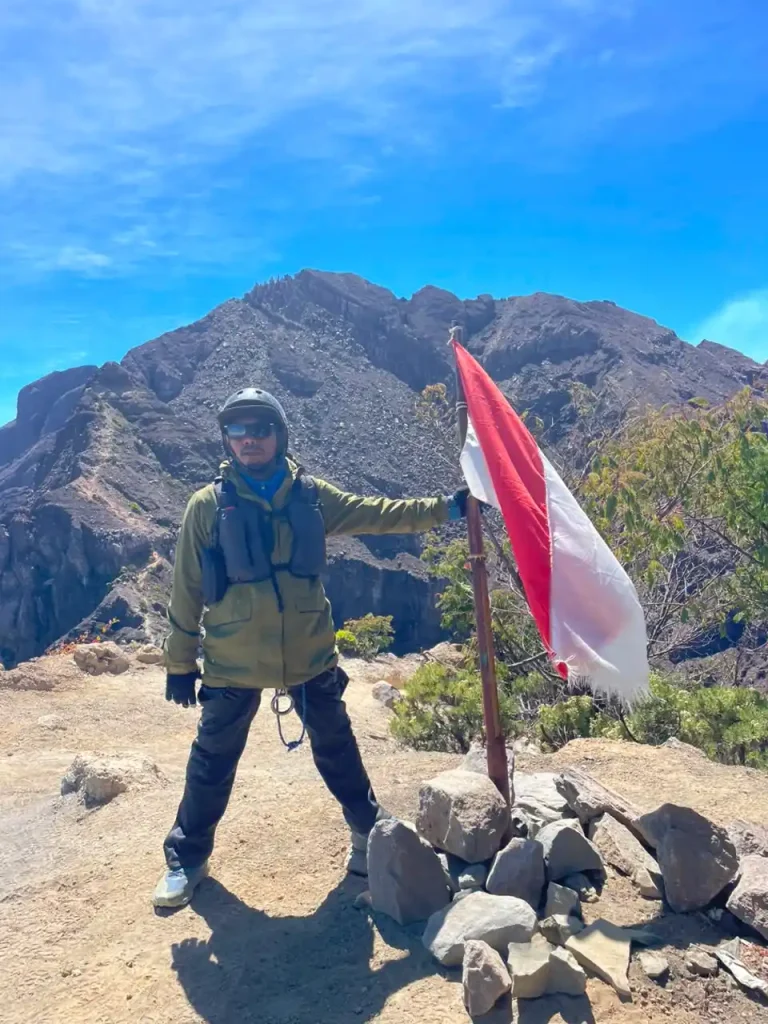
- Puncak Bendera (Flag Peak): The entryway to the exposed volcanic rock ridge. Harnesses are tethered to fixed steel cable lines.
- Extreme Cliff 1 & Puncak 17: A vertical rock traverse over a 400m drop, leading to a narrow pinnacle sweeping with gale-force winds.
- The “Sirothol Mustaqim” Bridge: A razor-thin ridge less than a meter wide with abyss-like drop-offs on both sides. Crossing it requires total mental focus and meticulous cable clipping.
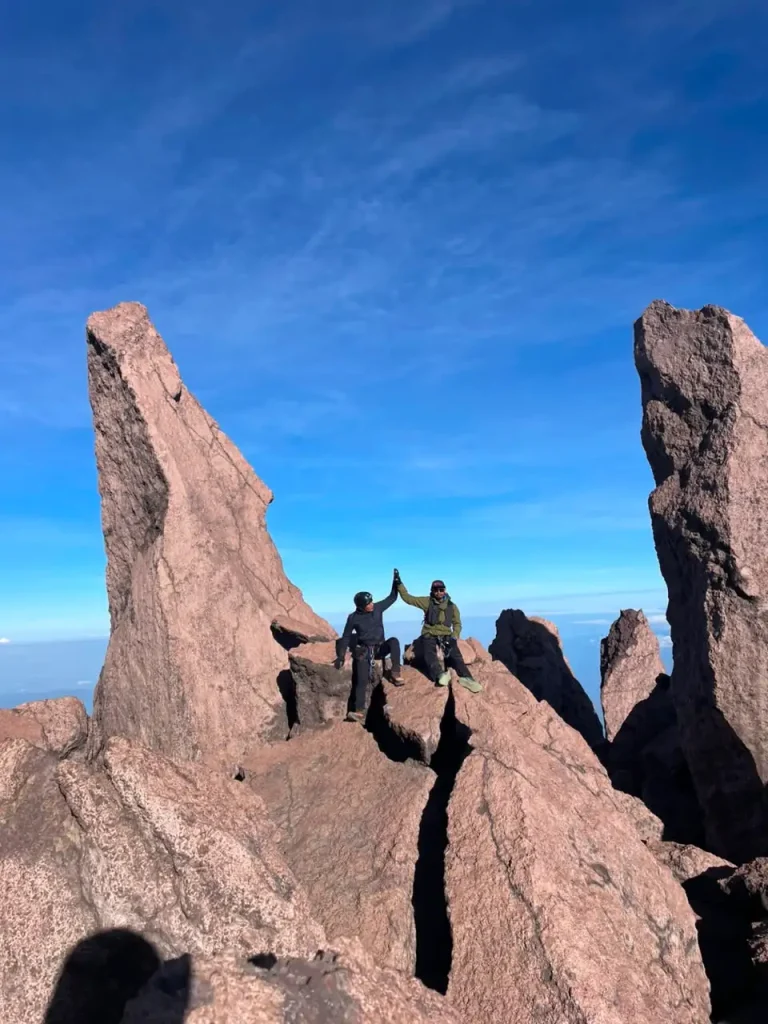
- Extreme Section 2 & Puncak Tusuk Gigi: A 15-meter vertical rock descent using Figure-8 descenders (rappelling), followed by scrambling through giant volcanic rock spires.
- Puncak Sejati (True Summit – 3,344m): The ultimate peak overlooking the massive 2-kilometer-wide active crater rim.
Standing on the rim of Raung’s gigantic active crater—watching steam rise from the inner volcanic cone—was a spiritual and exhilarating triumph. Every drop of sweat and every aching muscle proved worth it.
The Descent, Recovery & Final Reflections
Descending Raung is a true test of knee joints and stamina. As daylight flooded the mountain, the return walk revealed the sheer magnitude of the cliffs we had crossed in the dark. The sight of 500-meter vertical drops right beside our footsteps was both terrifying and breathtaking.
Due to severe muscle fatigue in my legs, our descent back to Pos 7 took longer than planned, arriving at 13:00 PM. Rather than rushing down to the village in an exhausted state, we made the smart decision to rest, overnight at Pos 7 once more, and enjoy a slow, peaceful morning.
The next morning, we woke up to a breathtaking sunrise overlooking the majestic silhouette of Mount Argopuro in the distance. We descended safely to Pos 1, sharing smiles and stories with ascending trekkers and fellow summiters along the way.
Frequently Asked Questions (FAQ) – Mount Raung Trekking
1. How difficult is Mount Raung compared to Mount Rinjani or Mount Semeru?
While Rinjani and Semeru are long endurance hikes on loose volcanic ash, Mount Raung via Kalibaru is a technical rock-climbing and ridge-traversing expedition. It requires climbing harnesses, helmets, ropes, and a total absence of fear of extreme heights.
2. Is it mandatory to hire a professional guide for Mount Raung?
Yes, absolutely. Basecamp regulations strictly prohibit unguided climbs. A certified technical guide is required to manage fixed anchor lines, inspect harnesses, and ensure safe passage across the extreme cliff sections.
3. Is there fresh water available on the trail?
No. There are no reliable water sources above Pos 1 on the Kalibaru route. Climbers must carry all necessary drinking and cooking water from the basecamp (typically 5 to 6 liters per person for a 3-day trek).
4. What is the best time of year to trek Mount Raung?
The optimal climbing season is during the dry season, from May to October. High winds and slippery rock faces during the rainy season (November to April) make the ridge walk extremely dangerous.
Book Your Private Mount Raung Expedition with Keliling Nusantara
At Keliling Nusantara, we specialize in high-end, safety-first adventure travel across Indonesia. When you book a private Mount Raung trek with us, you receive:
- Private Door-to-Door Transport: Comfortable private transfers from Surabaya Airport, Malang, or Bali.
- Certified Technical Guides & Porters: Experienced local mountain masters trained in high-angle rope safety and first aid.
- International Standard Safety Gear: UIAA-certified harnesses, helmets, carabiners, and static ropes.
- Full-Service Camp Catering: High-nutrition meals cooked fresh at Pos 7, comfortable tents, warm sleeping bags, and air mattresses.
Turn your dream of standing atop Java’s most extreme volcano into a safe, unforgettable reality. Contact the Keliling Nusantara team today to reserve your private expedition!
Would You Prefer to Experience This as a Private Trip?
Absolutely. Planning a private trip to Indonesia? All of our tour packages can be 100% customized to fit your travel style. Travel pace, group size, and preferred dates without the rush of a shared tour group.
With dedicated private transport, experienced local drivers, and tailored support from our team, we handle all the logistics so you can focus entirely on the experience. Reach out to customize this route and make this journey truly yours.
Comments are closed