


Prambanan Temple

Prambanan Temple Tour – The Ultimate Guide to Visiting Candi Prambanan in Yogyakarta
Planning a tour Candi Prambanan in Yogyakarta? This complete guide covers history, highlights, itinerary options, opening hours, entrance fees, travel tips, and recommended add-on destinations. Ideal for travelers looking for a cultural day trip from Yogyakarta and tour operators creating a Tour Jogjakarta package.
Introduction: A Timeless Jewel of Jogjakarta
Among all cultural attractions in Yogyakarta, Candi Prambanan stands as the most magnificent Hindu temple complex in Indonesia. With its towering architecture, delicate stone carvings, and mythological storytelling, Prambanan is an essential stop for anyone exploring the history and heritage of Java. A Prambanan Temple tour offers not only a journey through ancient civilizations but also an immersive cultural experience that brings visitors closer to Indonesia’s spiritual past.
As part of the wider “Tour Jogjakarta” category, Prambanan is often paired with Borobudur, Ratu Boko, Plaosan, and other archaeological sites. However, even as a stand-alone destination, it delivers a rich, unforgettable encounter with Javanese history and Hindu art.
Why Choose a Tour to Candi Prambanan?
Travelers join a tour Candi Prambanan for many reasons:
- It is the largest Hindu temple complex in Indonesia.
- The architecture resembles classical Indian temples but with distinctive Javanese style.
- The reliefs offer detailed depictions of the Ramayana and Mahabharata epics.
- The complex is wide, peaceful, and visually stunning.
- It is easy to access from Yogyakarta city (only 30–40 minutes).
- Visitors can combine it with sunset at Ratu Boko or the Ramayana Ballet performance.
For those planning a cultural itinerary in Yogyakarta, Prambanan remains one of the strongest highlights.
History of Prambanan: The Rise of a Hindu Kingdom
Prambanan was built in the 9th century by the Sanjaya Dynasty, a Hindu kingdom that dominated Central Java. The temple complex was constructed as a tribute to Shiva, known as the Destroyer and Transformer in Hindu belief. It originally consisted of more than 240 temples, forming an enormous sacred complex.
Significant historical points:
- The main temple, Candi Shiva, rises to 47 meters.
- The temple complex represents the Hindu Trimurti: Shiva, Vishnu, and Brahma.
- Construction began around 850 CE and expanded for several decades.
- It was abandoned after the capital moved to East Java.
- Earthquakes and volcanic eruptions contributed to its collapse.
- Restoration began during Dutch colonial rule and continues today.
A guided Prambanan Temple tour reveals layers of symbolism and ancient culture that are not immediately visible to casual visitors.
Architectural Highlights of Candi Prambanan
1. Shiva Temple (Candi Siwa Mahadewa)
The centerpiece of the Prambanan complex, with a towering spire and four interior chambers. Visitors can see statues of Shiva, Durga, Ganesha, and Agastya. The Durga statue is linked to local legends of Roro Jonggrang.
2. Brahma and Vishnu Temples
Standing symmetrically beside the Shiva temple, each structure contains a main statue representing one of the Trimurti gods. The symmetry, alignment, and vertical proportions create a visually powerful impression—especially at sunrise.
3. The Ramayana Relief Panels
Carved along the walls of the main temple, these panels depict the story of Rama, Sita, and the battle against Rahwana. The carvings showcase remarkable artistic detail and offer insight into the fusion of Hindu tradition and Javanese culture.
4. Sewu Temple Complex
Although often overlooked, Sewu—located only a short walk away—is one of the largest Buddhist temples in Central Java. Visiting Sewu during a tour Candi Prambanan gives travelers a rare opportunity to witness the coexistence of Hindu and Buddhist architecture during the same period.
5. Temple Courtyards and Scenic Pathways
Wide open courtyards, manicured lawns, and ancient stone ruins create photo-ready scenery throughout the archaeological park. Prambanan is one of the most photogenic sites in Indonesia.
Recommended Itinerary for a Half-Day or Full-Day Prambanan Tour
Your tour Candi Prambanan can be tailored to your schedule, depending on how deep you want to explore.
Half-Day Prambanan Tour (4–5 Hours)
- 08:00 — Pick-up from hotel in Yogyakarta
- 08:45 — Arrival at Prambanan, start exploring main temples
- 10:30 — Visit Sewu Temple
- 11:00 — Optional: Stop at Plaosan or Bubrah Temple
- 12:00 — Return to Yogyakarta
Full-Day Prambanan Cultural Tour (6–9 Hours)
- Explore all main temples
- Add Ratu Boko Palace for sunset
- Visit Plaosan, Lumbung, and Sewu
- Continue to Tebing Breksi or the Prambanan Museum
- End with Ramayana Ballet (if choosing an evening tour)
This itinerary is ideal for travelers who want a deeper cultural experience.
Best Time to Join a Tour Candi Prambanan
The best times to visit are early morning and late afternoon.
- Morning (08:00–10:00): Soft lighting, cooler temperature, fewer crowds
- Late Afternoon (15:30–17:30): Perfect for golden hour photography
- Dry Season (May–October): Ideal for outdoor travel
- Rainy Season (Nov–April): Bring an umbrella or poncho; showers are usually short
The site is open year-round, and each season offers a different atmosphere.
Entrance Fees and Opening Hours
- Opening Hours: 08:00 – 16:00
- Foreign Visitor Ticket: approx. USD 25 / person
- Children/Students: approx. USD 15
Combination tickets with Borobudur may be available depending on the season. Booking through a tour operator often saves time at the entrance.
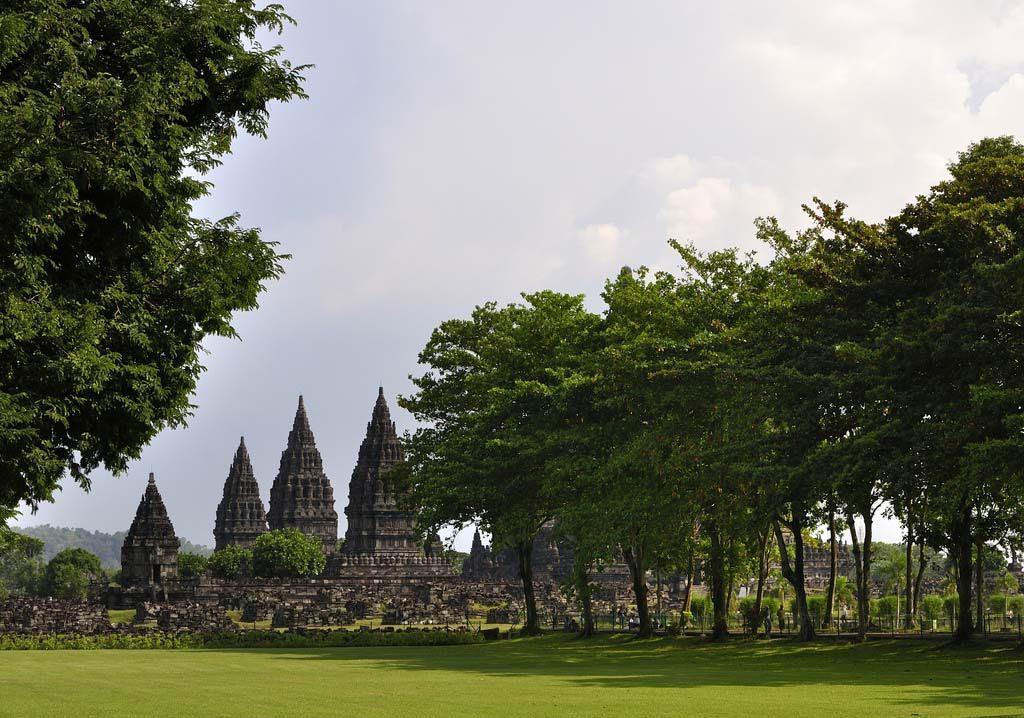
What to Expect During a Prambanan Temple Tour
1. Large Outdoor Complex
The entire temple area covers a broad landscape, so expect a fair amount of walking. Wear comfortable shoes and breathable clothing.
2. Sun Exposure
Prambanan has limited shade. Sunscreen, hats, and water are highly recommended.
3. Cultural Etiquette
Modest clothing is appreciated. Visitors must follow safety signs, especially when entering inner chambers.
4. Photography Opportunities
The main temples create dramatic silhouettes. Morning and late afternoon light are ideal. Professional photographers often choose Prambanan for pre-wedding or portfolio shoots.
Nearby Attractions to Combine with a Prambanan Tour
Ratu Boko Palace
A hilltop archaeological site with a panoramic view over Prambanan Valley. Famous for sunset tours.
Plaosan Temple
A twin Buddhist temple often called the “Romantic Temple.” Known for its symmetrical layout and serene atmosphere.
Tebing Breksi
A limestone cliff park with impressive carvings and wide open views, perfect for short walking tours.
Sewu Temple
One of the largest Buddhist complexes in Java, located right next to Prambanan.
Combining these sites provides added value for your Tour Jogjakarta products.
Ramayana Ballet: A Cultural Experience Not to Miss
The Ramayana Ballet at Prambanan is an award-winning performance held at an open-air theater with the illuminated temple complex as a backdrop. The show features traditional dance, gamelan music, fire effects, and classic Javanese costumes. Watching the ballet is a perfect way to conclude your tour Candi Prambanan.
Tour Candi Prambanan Package Inclusions
A typical tour package may include:
- Private transportation with driver
- Hotel pick-up and drop-off
- English-speaking guide
- Entrance tickets
- Optional sunset experience
- Optional Ramayana Ballet tickets
- Bottled water
Tour operators may also offer combined packages with Borobudur, Merapi Jeep Tour, or city sightseeing trips.
Essential Tips for Visiting Prambanan Temple
- Visit early to avoid crowds.
- Bring enough water, especially during dry season.
- Wear light, comfortable clothing.
- Allocate at least 2–3 hours for full exploration.
- Keep valuables secure, as the complex is busy during peak hours.
- Hire a local guide for deeper historical insight.
Conclusion: The Cultural Heart of Jogjakarta
A tour Candi Prambanan is more than a visit to an ancient temple—it is an immersive journey into Java’s spiritual and artistic legacy. Whether you’re interested in history, architecture, photography, or local culture, Prambanan offers a complete experience that captures the essence of Yogyakarta.
Its towering stone spires, storytelling reliefs, peaceful courtyards, and magical sunsets make it one of Indonesia’s greatest landmarks. For anyone creating or following a Tour Jogjakarta itinerary, Prambanan is an absolute essential.
Read More
- Menjangan Island Access Comparison (2026): Bali vs Banyuwangi — Which Is Better?
- 8 Best Activities Bawean for a 1-Day Shore Excursion
- 8 Fascinating Facts About Bawean Island: The Java Sea’s Hidden Eden
- Exploring Bawean Island: The Hidden Gem of the Java Sea You Must Visit
- Menjangan Island Snorkeling Price Guide (2026): What You Actually Pay