


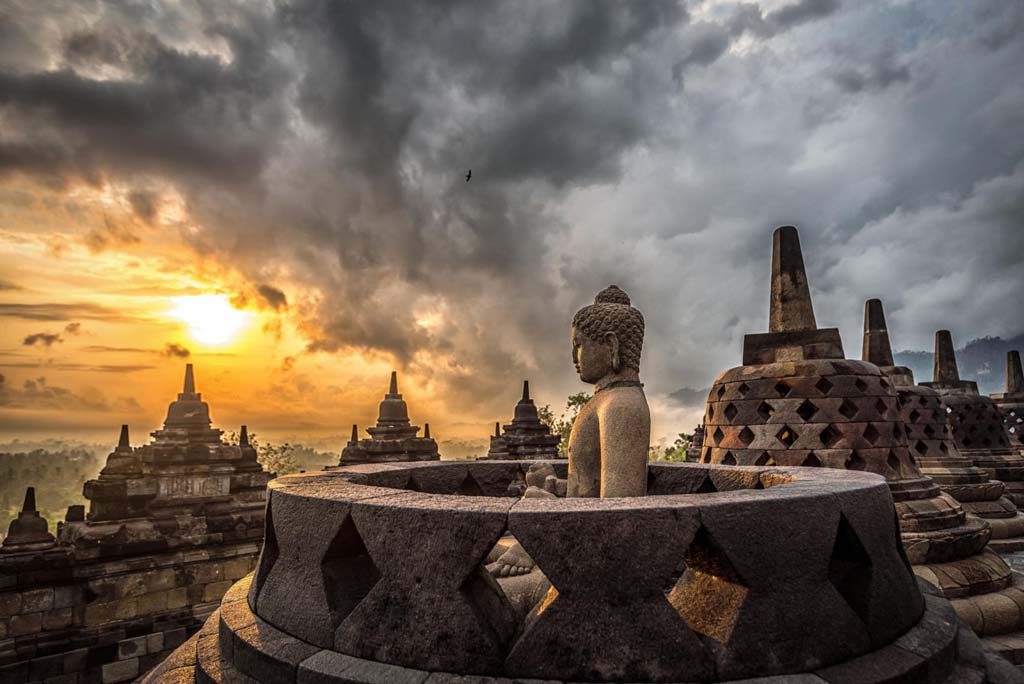
Borobudur Temple – Timeless Wonder of Central Java
Borobudur is the world’s largest Buddhist temple and one of the most important cultural landmarks in Indonesia. Located in Magelang, Central Java, just 40 kilometers from Yogyakarta, Borobudur attracts millions of visitors every year who come to witness its majestic architecture, spiritual atmosphere, and breathtaking sunrise views. Built in the 9th century during the reign of the Syailendra Dynasty, this UNESCO World Heritage Site is not only a religious monument but also a symbol of harmony between spirituality, art, and history.
Location & Accessibility
Borobudur is easily accessible from Yogyakarta (about 1.5 hours by car) and from Semarang (around 2.5 hours). The temple is situated in the lush Kedu Valley, surrounded by volcanic mountains such as Merapi, Merbabu, and Sumbing, which enhance its mystical aura. Many tourists combine Borobudur tours with nearby attractions such as Mendut Temple and Pawon Temple, which are aligned in a straight line with Borobudur.
Historical Background
Constructed with more than two million stone blocks, Borobudur is shaped like a giant mandala when viewed from above, symbolizing the Buddhist cosmology. The temple consists of nine stacked platforms topped by a large central dome. Its walls are decorated with over 2,600 relief panels and 500 Buddha statues, making it one of the most detailed stone carvings in the world. After being buried under volcanic ash and jungle for centuries, Borobudur was rediscovered in the 19th century and later restored with UNESCO support in the 1970s.
Visitor Experience
Walking up Borobudur is like taking a spiritual journey. The temple is divided into three levels: Kamadhatu (the world of desire), Rupadhatu (the world of forms), and Arupadhatu (the formless world). As visitors ascend, they symbolically move closer to enlightenment.
- Sunrise Tour: The most popular experience is the Borobudur sunrise tour, where visitors arrive before dawn and watch the sun slowly rise over Mount Merapi and the surrounding misty valley. The sight of golden sunlight illuminating the temple’s stupas is unforgettable.
- Cultural Performances: On certain days, Ramayana Ballet and traditional Javanese dances are performed in the temple complex, adding a cultural layer to the visit.
- Cycling Tours: Many tour operators offer cycling trips around Borobudur village, where visitors can see traditional pottery-making, batik workshops, and rice fields.
Practical Information
- Opening Hours: 6:00 AM – 5:00 PM daily
- Entrance Fee: IDR 50,000 for domestic visitors, around USD 25 for international visitors (combined tickets with Prambanan also available).
- Dress Code: Visitors are advised to wear modest clothing. Sarongs are usually provided at the entrance.
- Tips: Bring a hat or umbrella for shade, as the stone terraces can be very hot under the sun.
Why Visit Borobudur?
Borobudur is not just about architecture—it is a spiritual journey, a historical marvel, and a cultural immersion. Whether you are a history enthusiast, a spiritual seeker, or simply a traveler looking for unforgettable views, Borobudur offers a once-in-a-lifetime experience that represents the soul of Central Java.
Would You Prefer to Experience This as a Private Trip?
Absolutely. Planning a private trip to Indonesia? All of our tour packages can be 100% customized to fit your travel style. Travel pace, group size, and preferred dates without the rush of a shared tour group.
With dedicated private transport, experienced local drivers, and tailored support from our team, we handle all the logistics so you can focus entirely on the experience. Reach out to customize this route and make this journey truly yours.
Comments are closed